
 Save
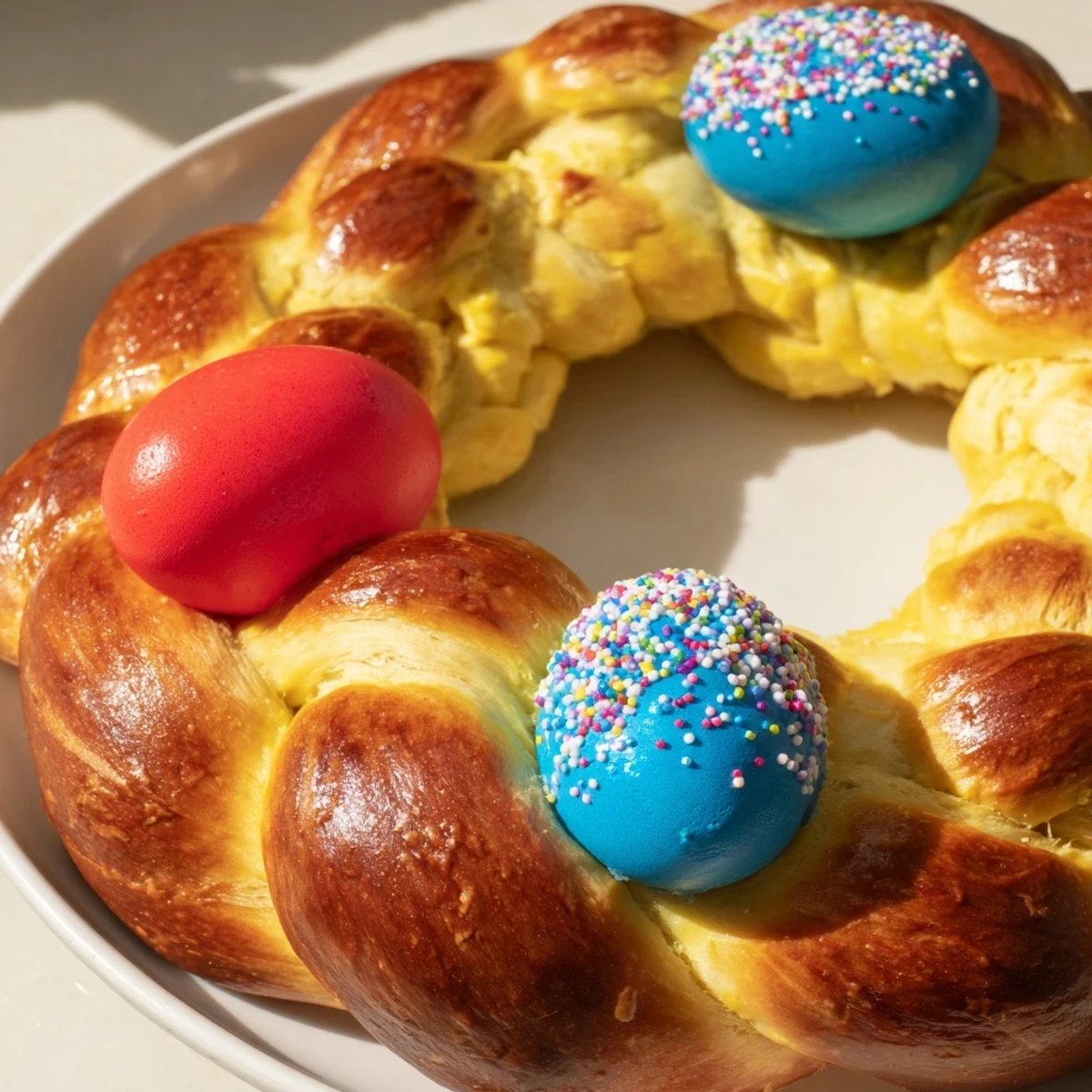
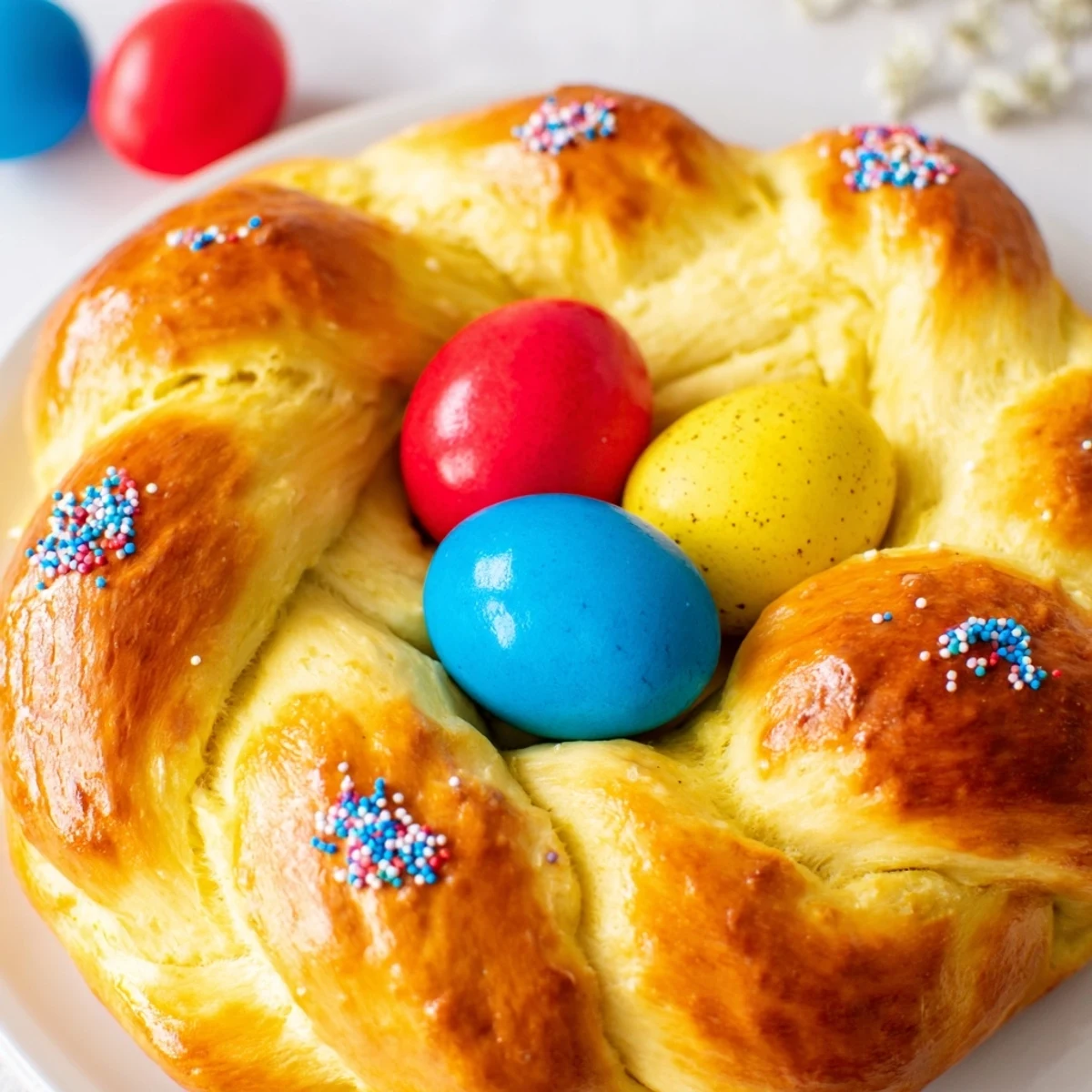
Save This traditional European-style braided bread offers tender, lightly sweet dough intertwined with vibrantly colored eggs, baking to a golden crust. The dough rises slowly, allowing for a soft and airy crumb, while subtle hints of vanilla and optional lemon zest add delicate flavor. The colored eggs, nestled inside, bake gently, creating a beautiful, festive centerpiece. Serve slices with butter or preserves to enhance the rich, comforting taste. Ideal for holiday gatherings or spring celebrations.
The first Easter after moving into my own apartment, I wanted something that felt like tradition but also like mine. My grandmother always made Easter bread, but I'd never attempted it alone. There's something magical about tucking brightly dyed eggs into dough, knowing they'll emerge perfectly cooked, nestled in golden braids. That first loaf came out slightly lopsided, but the smell of vanilla and lemon filled every corner of my tiny kitchen.
Last spring, my neighbor's kids watched through the window as I braided the dough, their noses pressed against the glass. When the bread emerged from the oven, they came knocking, drawn by that irresistible brioche fragrance. We sat around my table, pulling apart warm pieces and discovering those jewel-toned eggs inside like little gifts. Now it's not Easter until someone asks when the egg bread is coming out of the oven.
Ingredients
- All-purpose flour: Creates the perfect structure for those beautiful braids while keeping the crumb tender
- Active dry yeast: Make sure your milk is warm to the touch but not hot, or the yeast won't wake up properly
- Warm milk: I've learned that 110°F feels like comfortably warm bath water, perfect for activating yeast
- Unsalted butter: Melt it and let it cool completely so it doesn't scramble your eggs when you mix everything together
- Room temperature eggs: Cold eggs can shock the dough, so pull them out about 30 minutes before baking
- Pure vanilla extract: The real stuff makes a difference here since vanilla is one of the starring flavors
- Lemon zest: Even if you think you don't want it, grate some in—it brightens the whole loaf in ways you can't quite put your finger on
- Raw dyed eggs: Use food-safe coloring and let them dry completely before nesting them in the dough
Instructions
- Wake up the yeast:
- Stir together warm milk, a tablespoon of sugar, and yeast in a small bowl. Watch for tiny bubbles to appear on the surface—that's how you know it's alive and ready to work.
- Mix the dry foundation:
- Whisk flour, the rest of your sugar, and salt in a large bowl until they're thoroughly combined.
- Bring everything together:
- Pour in your foamy yeast mixture, melted butter, eggs, vanilla, and lemon zest. Stir with a wooden spoon until the dough starts pulling away from the sides of the bowl.
- Knead until smooth:
- Turn the dough onto a floured surface and work it for 8 to 10 minutes. You'll feel it transform from shaggy to silky and elastic under your hands.
- Let it rise:
- Place your dough in a greased bowl, cover it with a clean towel, and find a warm corner. In about an hour, it should have doubled in size.
- Shape the strands:
- Punch down the risen dough and divide it into 6 equal pieces. Roll each into a rope about 16 inches long, keeping the thickness consistent so they bake evenly.
- Braid and tuck:
- Braid 3 ropes together for each loaf, pinching the ends tightly to seal. Gently press 3 dyed eggs into the braid—they'll nestle deeper as the bread rises.
- Second rise:
- Cover your loaves and let them rest for 30 minutes more. They should look puffy and feel like a marshmallow when you gently press them.
- Glaze and bake:
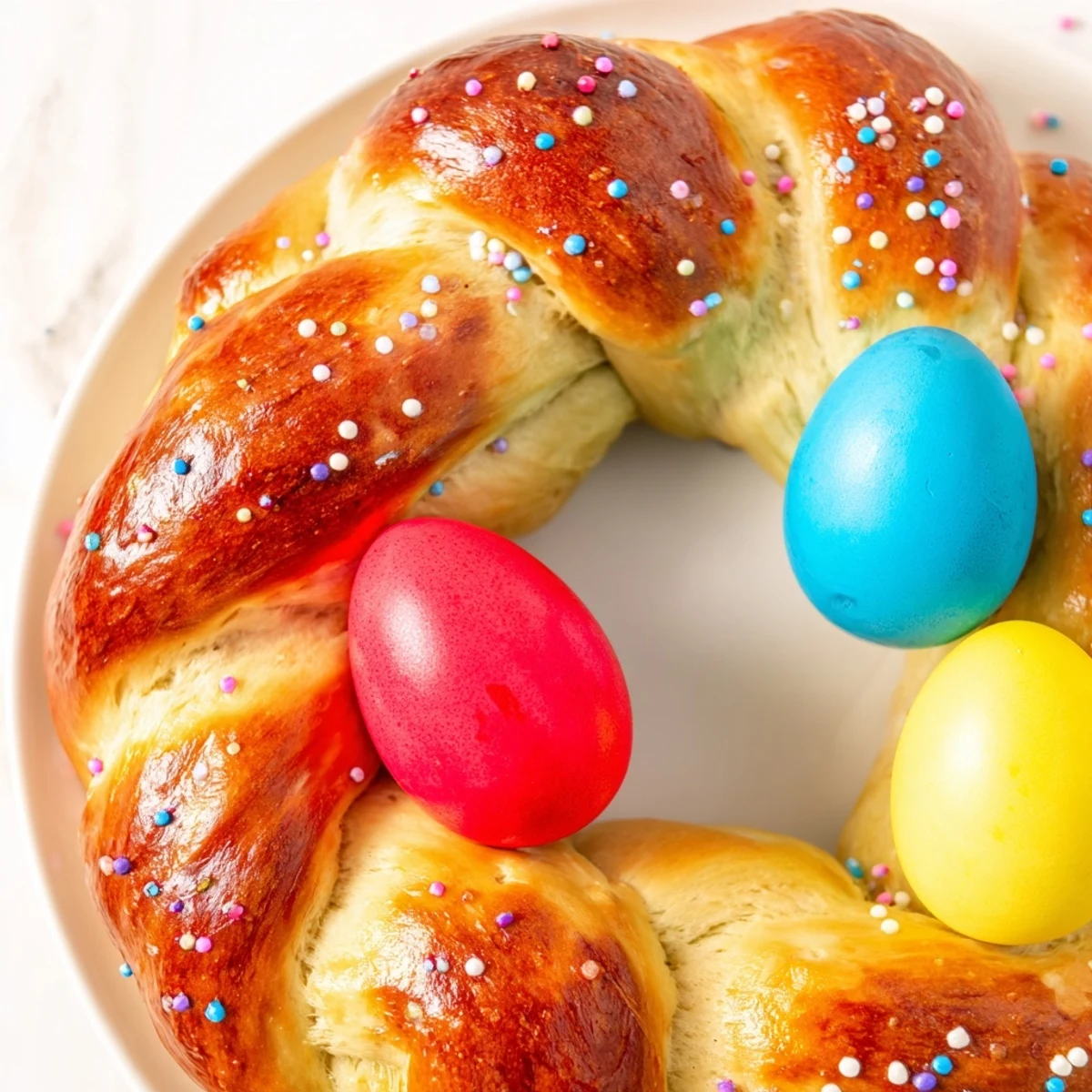
- Brush each loaf with beaten egg and scatter sprinkles if you're feeling festive. Bake at 350°F for 25 to 28 minutes until they're golden and sound hollow when tapped.
 Save
Save My youngest niece called it magic bread when she cracked open her baked egg right at the table, revealing that perfect creamy yolk inside. Now she asks every year if we're making the magic bread again, and honestly, that's all the tradition I need.
Making It Your Own
One year I added cardamom on impulse, and now it's the version everyone requests. The spice warms through the vanilla in this way that feels both old-fashioned and surprising.
Serving Suggestions
Slice thick slabs while still slightly warm and spread with salted butter or your grandmother's strawberry preserves. There's something about the combination of sweet bread and salty butter that makes everyone linger at the table a little longer.
Storage And Refreshing
This bread keeps beautifully wrapped in foil for 2 days, though it rarely lasts that long in my house. If it starts to feel a little stale, wrap individual slices in foil and warm them at 350°F for about 5 minutes.
- Freeze unbaked loaves after the first rise, thaw overnight, then let rise and bake
- The baked eggs can be removed and eaten separately, though I love discovering them right in the bread
- Brush with simple syrup while warm for an extra glossy finish
 Save
Save Whatever you do, don't skip the lemon zest even if you're skeptical. It's the secret that makes people ask what's different about this bread.
Recipe FAQs
- → What type of flour is best for making this bread?
-
All-purpose flour works well, providing balance between structure and tenderness ideal for a soft, braided loaf.
- → How do colored eggs stay safe to eat after baking?
-
Use food-safe coloring and ensure eggs are fully cooked within the bread during baking for safe consumption.
- → Can I substitute the milk in the dough?
-
Yes, warm dairy or plant-based milk alternatives can be used to maintain moisture and softness.
- → What gives the bread its shiny crust?
-
Brushing the loaf with beaten egg before baking creates a glossy, golden finish.
- → How long should the dough be kneaded for best results?
-
Kneading for 8–10 minutes develops gluten, yielding a smooth, elastic dough that rises well.