
 Save
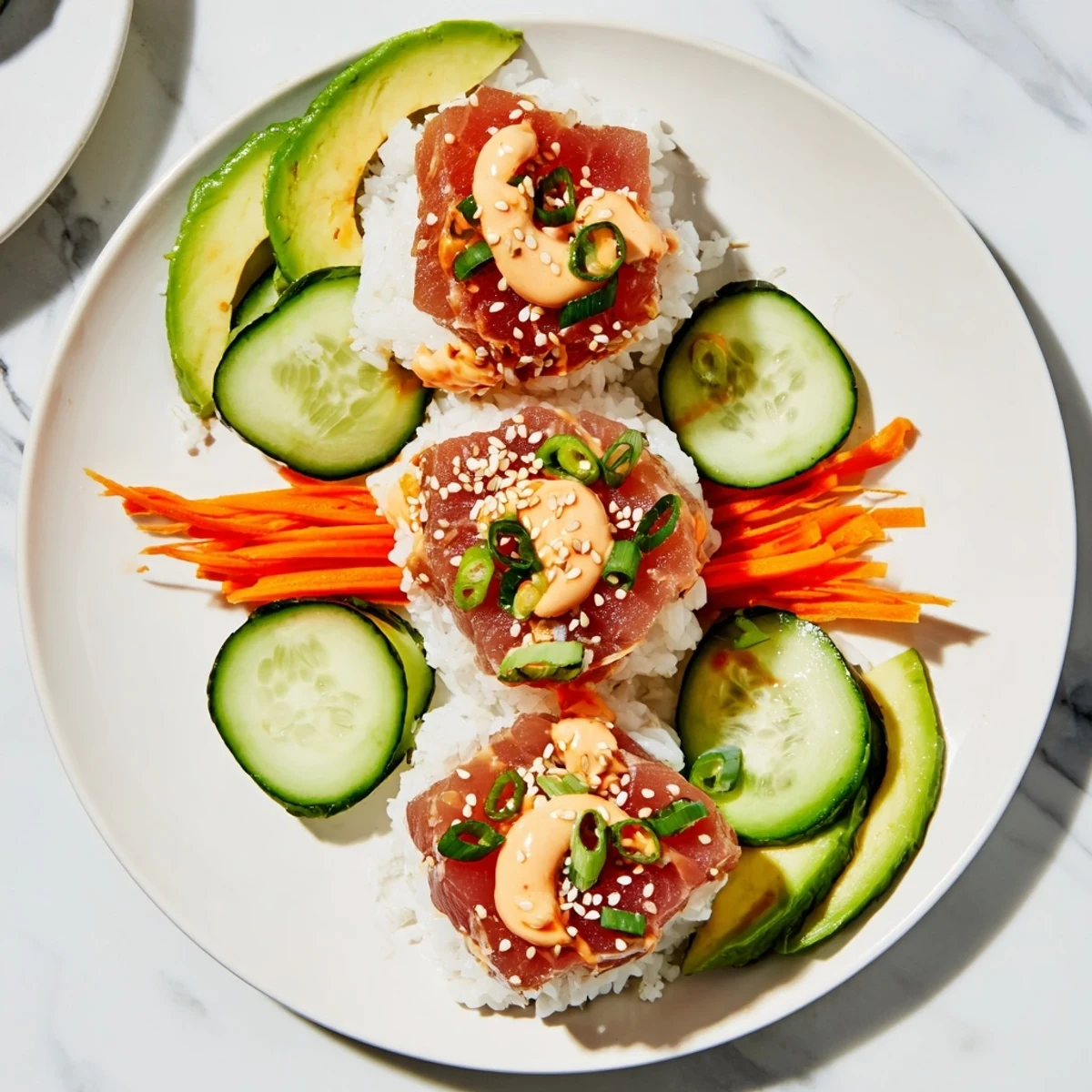
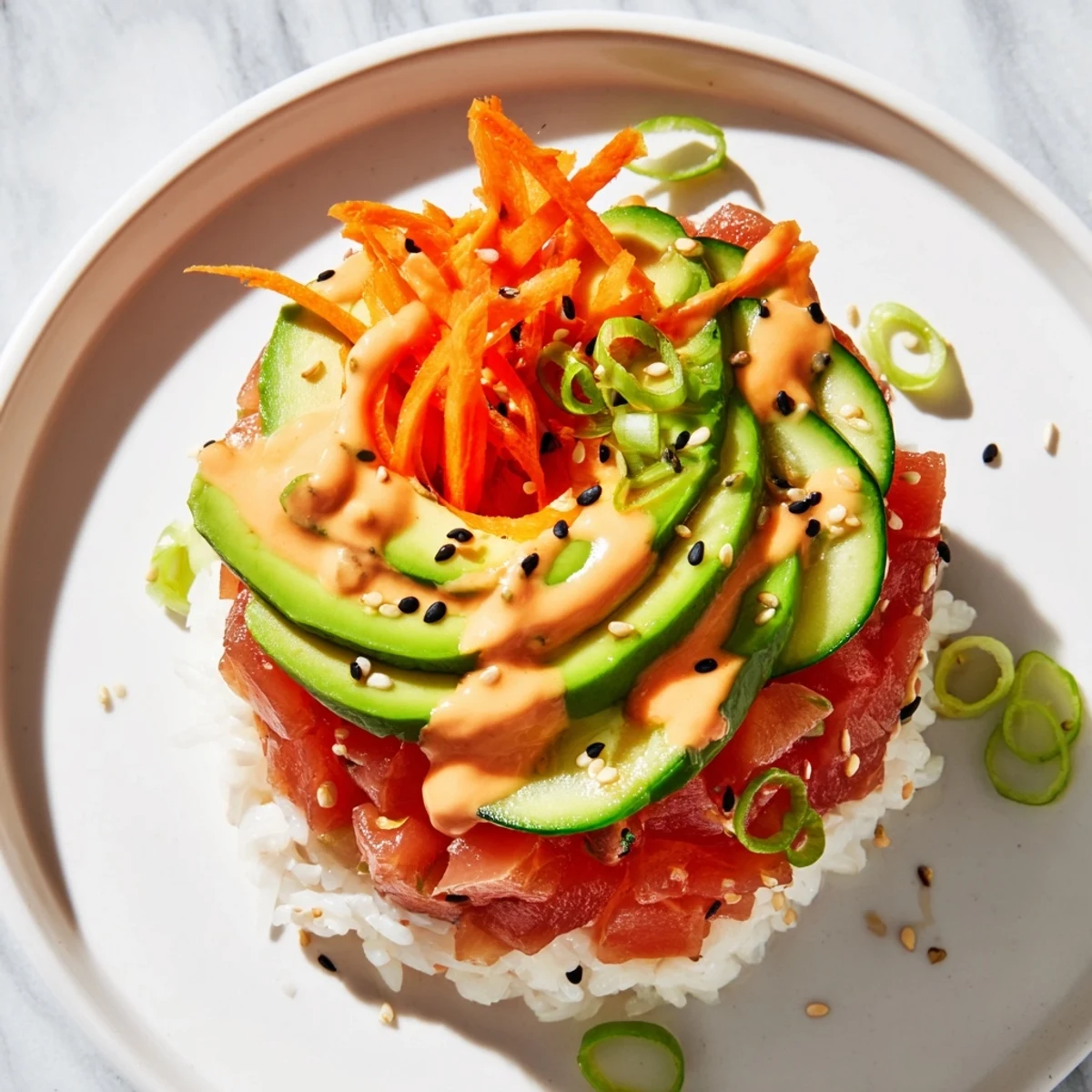
Save This Hawaiian-inspired bowl layers tender spicy tuna tossed in a tangy sauce over fluffy sushi rice. Creamy avocado slices and crisp cucumber add fresh textures, while sesame seeds and nori provide a subtle crunch. The poke sauce blends mayo, Sriracha, soy, sesame oil, lime, and green onion to create a harmonious, flavorful dish that’s perfect for a quick, easy main course.
The first time I made poke at home, I'd just returned from a trip to Honolulu where I'd eaten it almost daily from a small shack near the beach. I stood in my kitchen with sushi-grade tuna from the fancy market, thinking there's no way I could recreate that salty, spicy, utterly addictive bowl. But when I mixed that sauce and tasted it, something clicked—it wasn't trying to be restaurant-perfect, it was just vibrant and honest and exactly what I'd been craving.
I made this for my friend who claims he doesn't like raw fish, and watching him take that first bite was priceless. The creamy avocado, the cool cucumber, the heat that builds slowly—it all worked together in a way that made him forget to be skeptical. He asked for the recipe before he'd finished the bowl.
Ingredients
- Sushi-grade tuna, diced: Buy from a trusted fishmonger and ask specifically for sushi-grade; it makes all the difference in safety and texture, and don't cut it too far ahead or it oxidizes.
- Japanese Kewpie mayonnaise: The umami depth is subtle but unmistakable compared to regular mayo, and the slightly sweeter flavor complements spice beautifully.
- Sriracha sauce: Start with less than you think you need; you can always add more heat but you can't take it back.
- Toasted sesame oil: A little goes a long way and transforms the whole sauce with its nutty warmth.
- Sushi rice: The seasoning step matters more than you'd expect—don't skip folding in the vinegar mixture while the rice is still warm.
- Avocado: Choose one that yields slightly to pressure, slice it just before assembling, and a squeeze of lime keeps it from browning.
- Cucumber: I slice mine thin on a mandoline and let it sit in a colander for a few minutes to shed excess water so the bowl stays crisp.
- Sesame seeds: Toast them yourself if you have time; the flavor is noticeably deeper than pre-toasted ones.
Instructions
- Start with perfect rice:
- Cook your sushi rice and while it's still steaming, fold in the rice vinegar, sugar, and salt with a gentle hand—you're coating the grains, not mashing them. The warmth helps everything absorb so the rice tastes seasoned throughout, not just on the outside.
- Build the spicy tuna sauce:
- Mix mayo, Sriracha, soy, sesame oil, lime, and green onion in a bowl, then add your diced tuna and toss gently so every piece gets coated without breaking apart. Chill it while you prep everything else so the flavors marry and the tuna stays cold.
- Prep your vegetables:
- Slice avocado, thinly slice cucumber, julienne carrot if you're using it, and have your edamame and nori ready. Work efficiently here so nothing sits around getting brown or soggy.
- Assemble with intention:
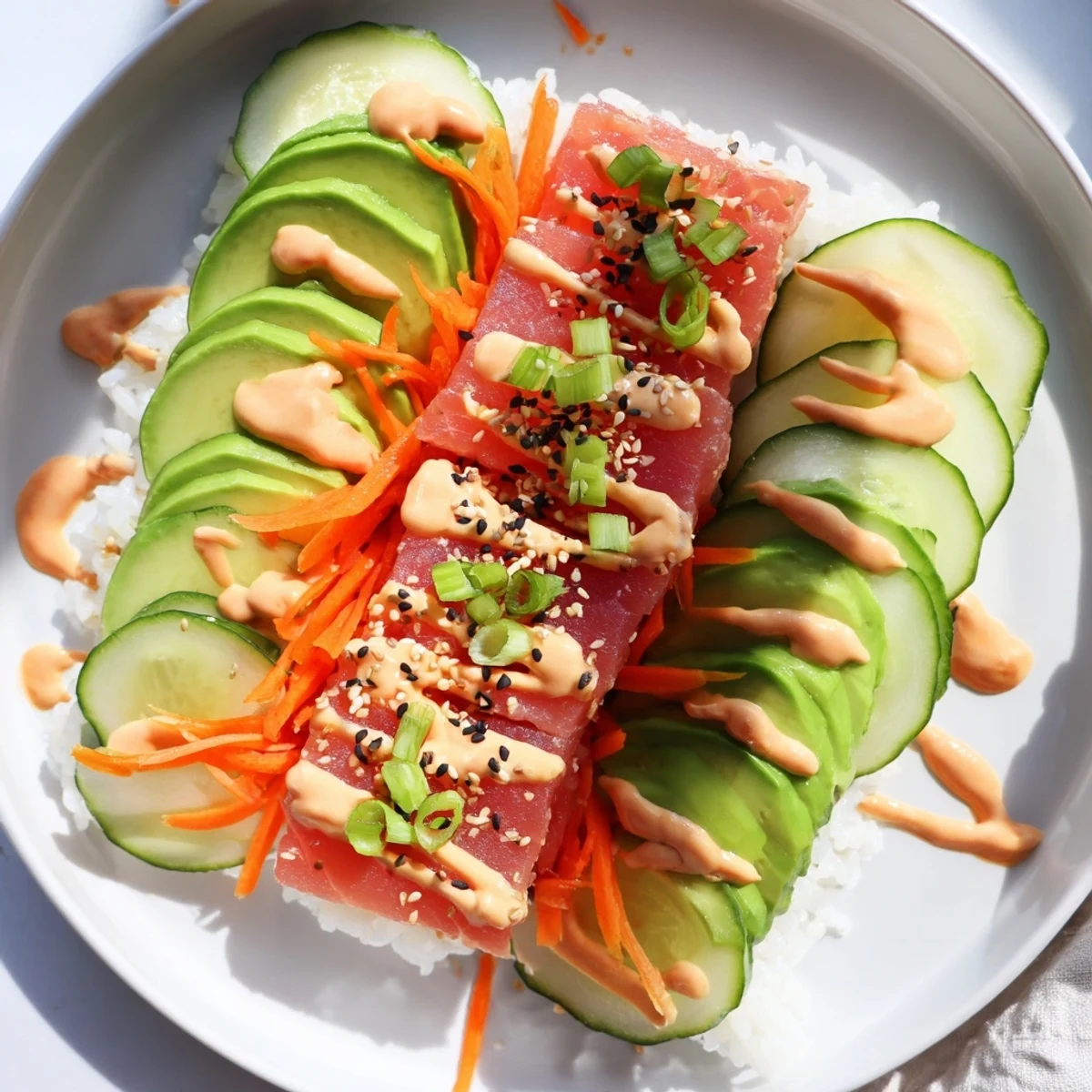
- Divide cooled rice between two bowls, then arrange tuna, avocado, cucumber, carrot, and edamame in little sections around the top so each spoonful gets a bit of everything. Don't pile everything in one spot; the visual appeal is part of the eating experience.
- Finish with flourish:
- Scatter sesame seeds and nori strips over the top, add extra green onion, and drizzle with a touch more Sriracha or mayo if you're feeling it. Serve right away while the rice is still warm and the vegetables are at their crispest.
 Save
Save There was a moment last summer when I made this for my family on a weeknight, and my dad—who usually eats the same three things—actually asked what was in the sauce. We ended up talking about the trip to Hawaii I'd taken, about trying new things, about how sometimes the best meals happen in your own kitchen. That bowl became a small bridge between us.
Choosing Your Tuna
I've learned that the quality of your tuna is non-negotiable here because it's the star. Yellow fin has a milder flavor and buttery texture, while ahi (big eye) is richer and slightly more assertive. Go to your fishmonger, explain you're making poke, and ask what they'd choose today—they'll appreciate the question and usually guide you toward the best option.
The Sauce is Everything
This spicy mayo is honestly the secret weapon that makes people think you're a better cook than you are. The balance of creamy, salty, spicy, and tangy works because each element has a job—mayo carries flavor and richness, Sriracha brings heat, soy adds umami depth, sesame oil adds nuttiness, and lime brightens everything. Play with the ratios once you've made it once; your perfect version might be slightly different than mine.
Making It Your Own
The beauty of a poke bowl is that it's flexible enough to bend to what you have and what you love. Some days I add pickled ginger for extra bite, or crispy fried onions for texture, or swap in salmon because that's what looks good at the market. The rice and the sauce are your anchors, but everything else is negotiable.
- If you don't eat raw fish, cook the tuna gently in a hot pan for just 30 seconds per side and it still works beautifully.
- For extra umami, add a tiny pinch of MSG or a sprinkle of furikake seasoning over the top.
- Leftover poke sauce keeps in the fridge for days and is amazing on grilled fish, roasted vegetables, or even rice the next day.
 Save
Save There's something about a poke bowl that feels both restaurant-quality and deeply personal, like you've figured out something most people haven't. Make this for someone you want to impress, or make it for yourself on a Tuesday night when you deserve something good.
Recipe FAQs
- → What type of tuna is best for this dish?
-
Sushi-grade tuna diced into small cubes is preferred for its freshness and tender texture, ensuring a safe and delicious experience.
- → Can I prepare the rice ahead of time?
-
Yes, cooking sushi rice in advance and mixing it with rice vinegar, sugar, and salt allows flavors to meld while maintaining the right texture once cooled.
- → How can I adjust the spiciness level?
-
Modify the amount of Sriracha sauce in the tuna marinade to suit your preferred heat intensity without overpowering other flavors.
- → Are there alternative garnishes to enhance texture?
-
Pickled ginger, crispy fried onions, or additional sesame seeds can add contrasting crunch and complexity to the bowl.
- → What side dishes pair well with this bowl?
-
A light miso soup and a crisp white wine or sake complement the flavors nicely, balancing the richness of the tuna and avocado.