
 Save
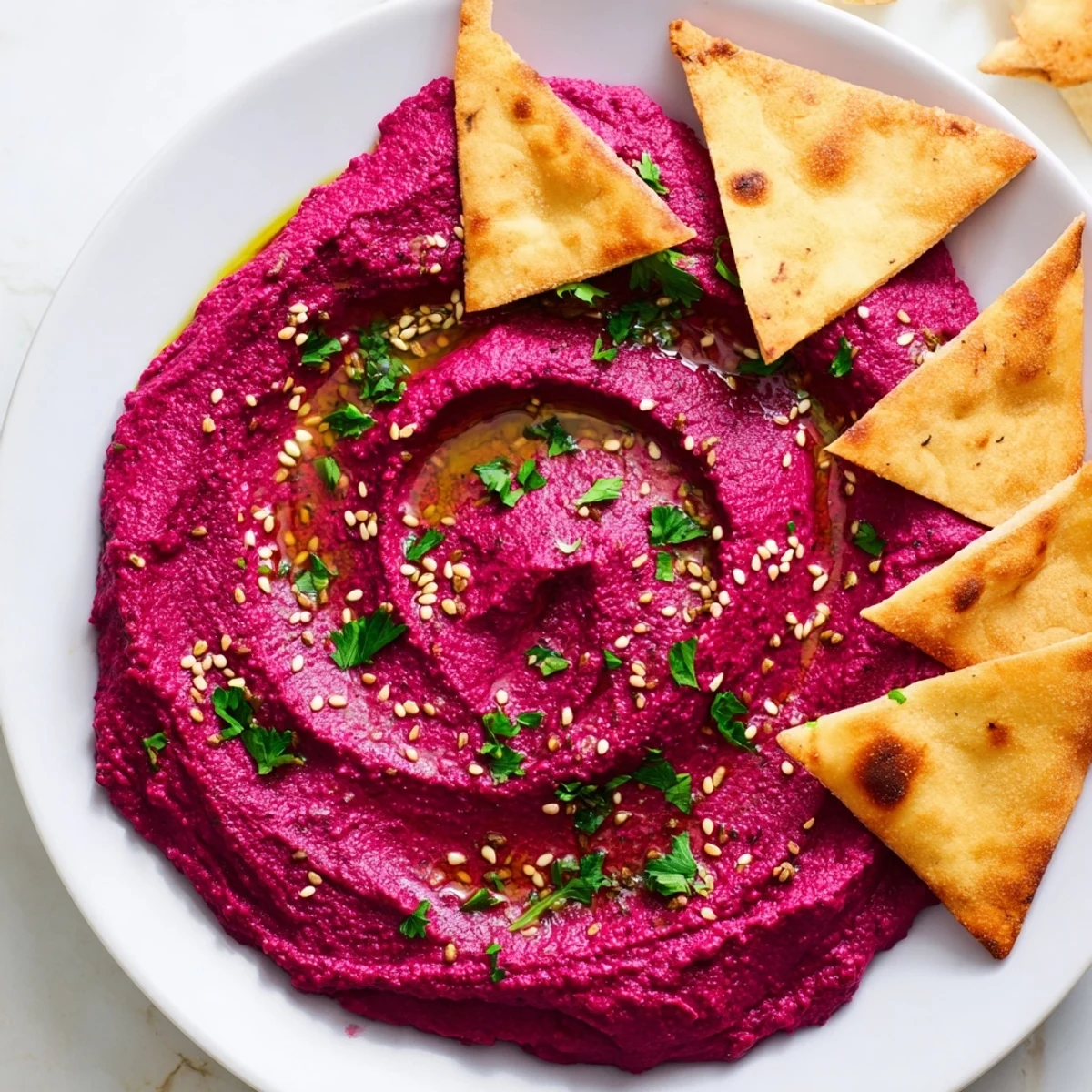
Save This dish features smooth, velvety hummus brightened with roasted beets and aromatic spices. The beets lend a natural sweetness and vibrant color, balanced by the earthiness of chickpeas and the richness of tahini and olive oil. Toasted pita triangles provide a crunchy contrast, seasoned simply with olive oil and a hint of smoked paprika for depth. Together, they create a visually appealing and flavorful starter that’s easy to prepare and perfect for sharing.
The first time I made beet hummus, I was staring at a farmer's market beet with absolutely no plan. Its deep crimson skin seemed almost too pretty to cook with, but the moment it hit the oven, my kitchen filled with this earthy, sweet aroma that changed everything. When I blended it with chickpeas and tahini, the whole thing turned this shocking magenta that felt more like edible art than dip. My guests couldn't believe it was homemade, and honestly, neither could I.
I served this at a small dinner party last fall, and someone asked if I'd made it professionally. The combination of that vibrant color and the crispy, warm pita chips created this moment where everyone just stopped talking for a few bites. It wasn't fancy, but it felt special, and I realized then that the simplest things sometimes say the most.
Ingredients
- 1 medium beet (about 150 g), trimmed and scrubbed: This is your star ingredient and the reason the hummus looks nothing like traditional versions; roasting concentrates its sweetness while the earthiness stays grounded.
- 1 can (400 g) chickpeas, drained and rinsed: Buy canned if you're short on time, but give them a good rinse to remove excess sodium and keep the texture light.
- 2 tbsp tahini: This creamy paste is what makes hummus actually creamy; don't skip it or substitute, as sesame is irreplaceable here.
- 2 tbsp extra-virgin olive oil: Use something you actually like tasting, because it shows in every bite.
- 2 tbsp lemon juice (about 1 lemon): Fresh lemon brightens everything; bottled juice will give you a duller flavor that no amount of extra salt can fix.
- 1 garlic clove, minced: One clove is all you need; garlic hummus should be assertive but never overpowering.
- 1/2 tsp ground cumin: This warm spice whispers in the background, adding depth without announcing itself.
- 1/2 tsp sea salt, or to taste: Taste as you go because the chickpeas and tahini already bring saltiness.
- 2–3 tbsp cold water, as needed: Add water gradually to reach the exact creaminess you want without making it soupy.
- 3 large pita breads, cut into triangles: Fresh pita makes the biggest difference; if yours are thick or dry, brush them generously with oil.
- 2 tbsp olive oil for chips: The oil is what creates those crispy edges, so don't be shy.
- 1/2 tsp sea salt and 1/2 tsp smoked paprika (optional): The paprika adds a subtle smokiness that makes people ask what the secret ingredient is.
- 1 tbsp toasted sesame seeds: Toast them yourself in a dry pan if you can; they'll taste so much deeper than pre-packaged.
- 1 tbsp chopped fresh parsley: A bright, green finish that makes the magenta color pop even more.
- Drizzle of olive oil for serving: This final drizzle isn't just for looks; it brings richness to each spoonful.
Instructions
- Roast the beet slowly and completely:
- Wrap your beet in foil and let it roast at 200°C (400°F) for 40–45 minutes until a fork slides through effortlessly. You'll know it's done when the skin loosens and the whole thing smells like concentrated earthiness.
- Blend everything until velvet smooth:
- In a food processor, combine your cooled, chopped beet with chickpeas, tahini, olive oil, lemon juice, garlic, cumin, and salt. Blend in long pulses, then add cold water one tablespoon at a time while the processor runs, stopping when you reach that perfect creamy consistency that falls off a spoon slowly.
- Toast the pita until it shatters:
- Arrange pita triangles on a baking sheet, brush both sides generously with oil, and sprinkle with salt and smoked paprika. Bake at 200°C (400°F) for 8–10 minutes, turning once halfway through, until they're golden and crisp enough to snap between your fingers.
- Plate it beautifully:
- Transfer hummus to a serving bowl and use the back of a spoon to create gentle swirls across the top. Drizzle with a final ribbon of olive oil, then scatter sesame seeds and fresh parsley over everything.
- Serve warm and eat immediately:
- The pita chips are best enjoyed right out of the oven when they're still warm and at their most crispy.
 Save
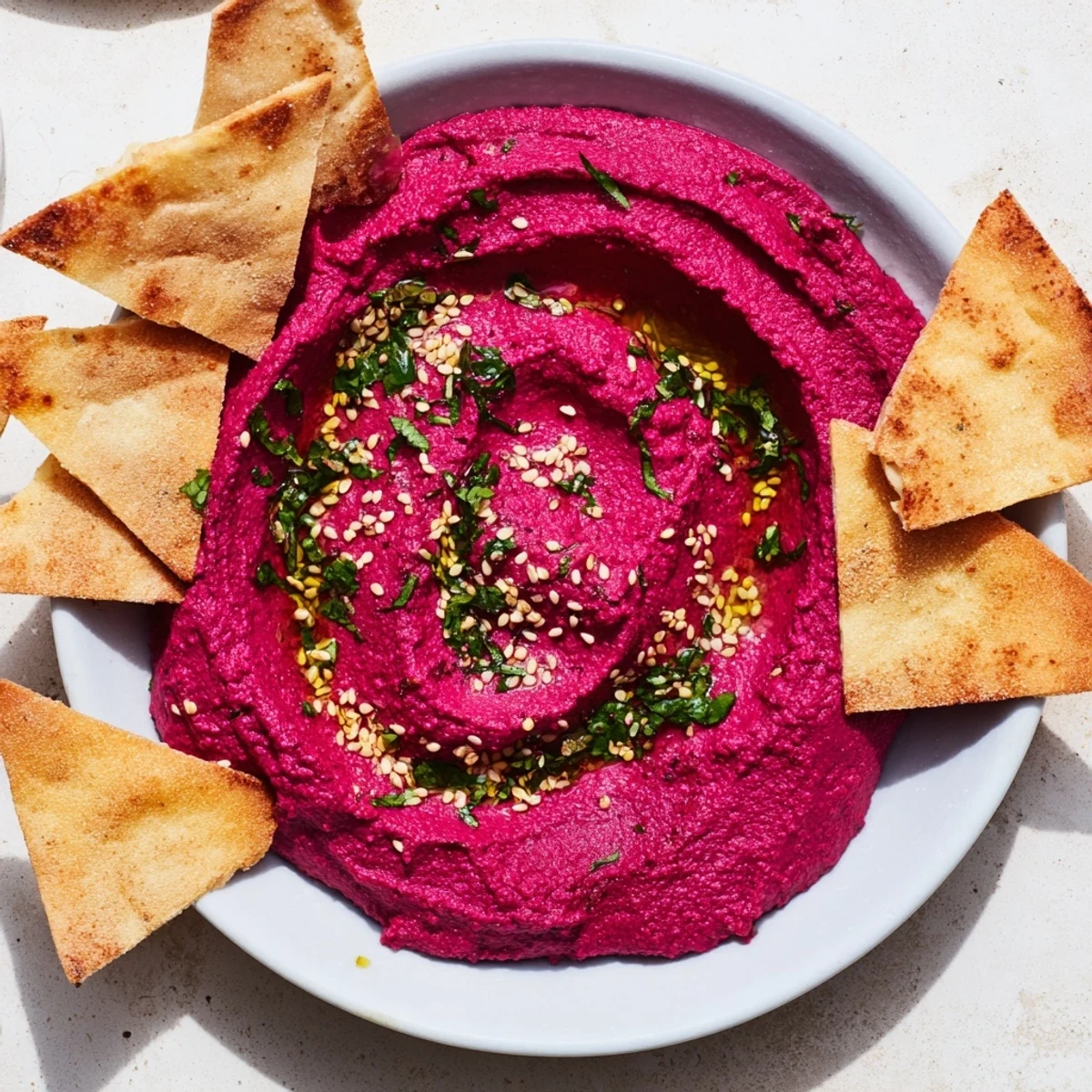
Save There's something magical about serving something that's simultaneously rustic and refined, and beet hummus hits that note perfectly. When people taste the subtle sweetness and then bite into a warm, crispy chip, you see their face light up in that way that reminds you why we cook.
Why Beets Transform Hummus
Traditional hummus is delicious, but it can blur into the background on a mezze board. Beets change that completely—they bring natural sweetness, stunning color, and an earthy depth that regular chickpea hummus simply doesn't have. The moment roasted beet hits the food processor with tahini and lemon, you're creating something that tastes homemade and thoughtful without requiring any special techniques.
The Secret to Perfect Pita Chips
Most people either oversalt their pita chips or underbake them, ending up with either too-salty mouthfuls or chips that go stale within an hour. The trick is to brush the oil generously before seasoning, bake until they're actually crispy (not just golden), and eat them within a few hours while they still have that contrast between the crunchy exterior and tender inside. If you make extra chips, store them in an airtight container and revive them in a warm oven for 2 minutes before serving.
Serving and Storage Wisdom
This hummus is genuinely forgiving and gets better over a day or two as flavors meld together. You can make it up to 4 days ahead and keep it refrigerated, which is perfect for meal prep. For a gluten-free version, swap the pita chips for vegetable crudités or gluten-free crackers and suddenly you've got an option for everyone at your table.
- Let hummus sit at room temperature for 15 minutes before serving so the flavors aren't muted and the texture is silky rather than stiff.
- Make extra pita chips even if you don't think you'll need them; they'll be gone before dessert time.
- If you want to dress this up, a sprinkle of pomegranate seeds or a tiny drizzle of pomegranate molasses adds tartness that cuts through the richness beautifully.
 Save
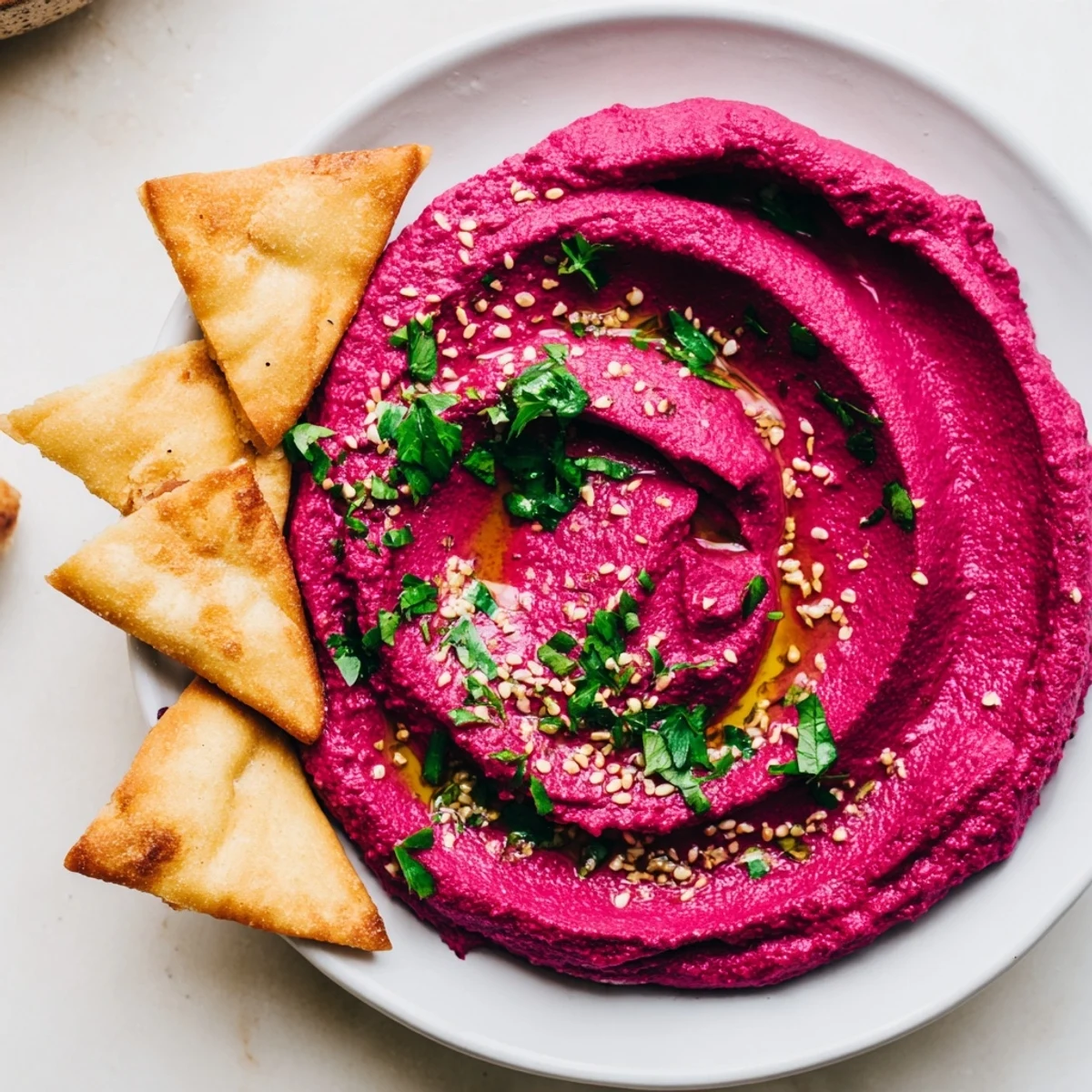
Save This recipe has become my go-to when I want to impress without overthinking it. Serve it with warmth, watch people's faces change when they taste it, and enjoy knowing you made something beautiful and delicious from just a few honest ingredients.
Recipe FAQs
- → How do roasting beets affect the flavor?
-
Roasting beets enhances their natural sweetness and softens their texture, adding depth and richness to the blend.
- → What gives the hummus its creamy texture?
-
The combination of chickpeas, tahini, and olive oil creates a smooth, creamy consistency that’s easily adjusted with cold water.
- → How can pita chips be made crispier?
-
Brushing pita triangles with olive oil and baking them until golden ensures a crisp, crunchy texture perfect for dipping.
- → Can the seasoning be adjusted for more spice?
-
Yes, adding cayenne pepper or smoked paprika can enhance the smoky, spicy notes without overpowering the other flavors.
- → What are good serving suggestions?
-
Serve with fresh vegetables or gluten-free crackers to accommodate dietary preferences and add variety.