
 Save
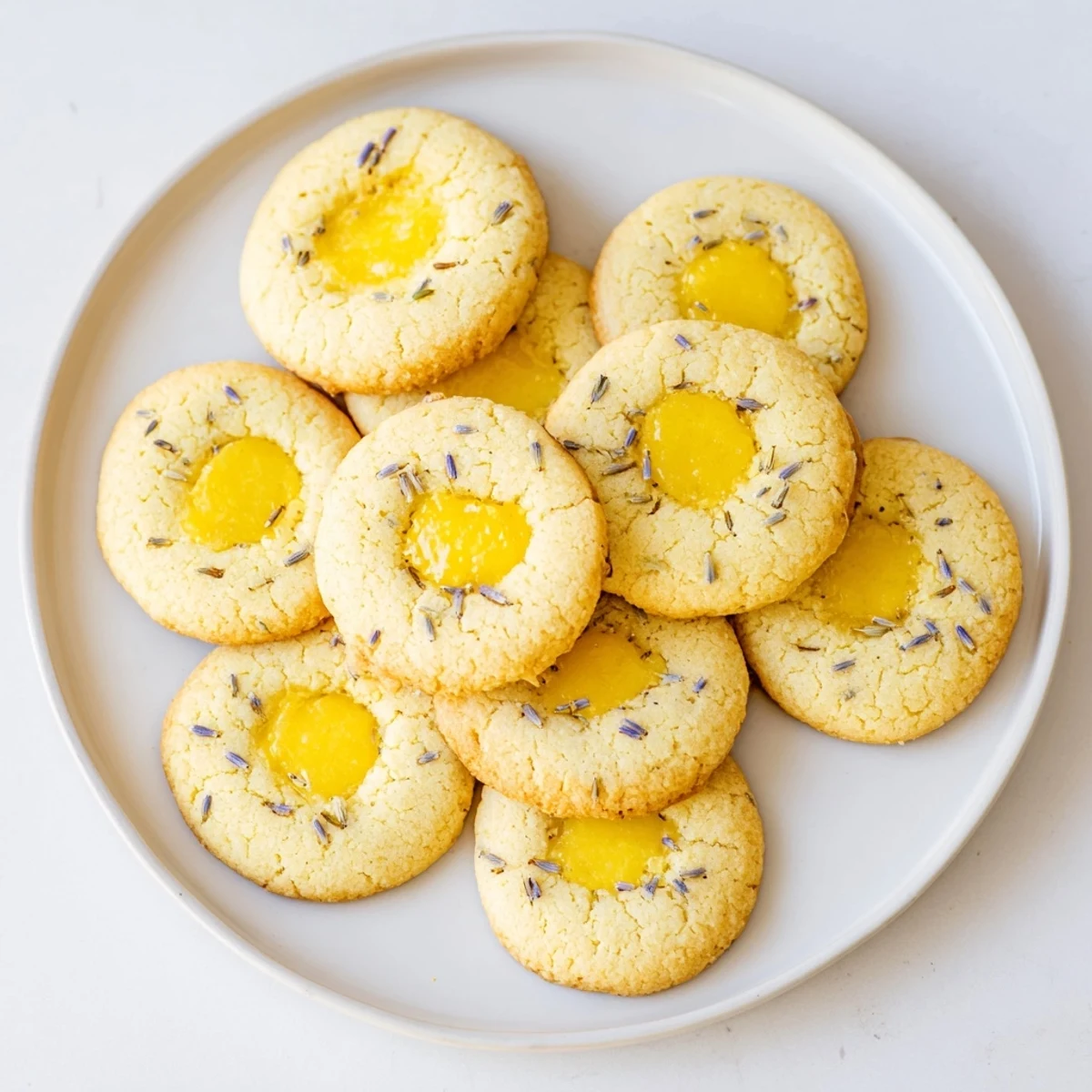
Save These delicate thumbprint cookies combine the bright citrus notes of fresh lemon zest and juice with the subtle floral aroma of dried lavender. The buttery dough creates a tender crumb that perfectly complements the sweet and tangy lemon curd filling nestled in the center. Ready in just over 30 minutes, these elegant treats are ideal for serving alongside afternoon tea or presenting as a sophisticated dessert.
The first time I made thumbprint cookies, I pressed too hard and the dough cracked open like little mouths demanding to be fed. These lemon lavender versions became my redemption story, their golden crumb holding just enough curd to make everything right.
My neighbor knocked on my door during that first batch, drawn by the scent of butter and lavender wafting through our shared hallway. We ate them warm with tea while rain tapped against her umbrella on the floor.
Ingredients
- All-purpose flour: The structure here needs to be delicate but strong enough to hold that puddle of curd without collapsing.
- Baking powder: Just enough lift to give these cookies a tender crumb that practically melts on your tongue.
- Salt: A quarter teaspoon is all you need to make those floral notes really sing against the butter.
- Unsalted butter: Room temperature is nonnegotiable here because cold butter creates tough cookies.
- Granulated sugar: Cream this thoroughly with the butter or your cookies will spread into sad flat puddles.
- Egg yolk: The extra richness keeps the texture velvety while omitting the white prevents excess spreading.
- Lemon zest: Grate this directly into your sugar and let them hang out together for intensified flavor.
- Lemon juice: Fresh squeezed adds a bright acidic note that cuts through all that buttery sweetness.
- Vanilla extract: Pure extract only because the artificial stuff clashes with the delicate lavender.
- Dried culinary lavender: Chop it finely so no one gets an overwhelming bite of flowers, and please use food grade.
- Lemon curd: Homemade is lovely but a good quality store bought version works perfectly in a pinch.
Instructions
- Get your oven ready:
- Preheat to 350F and line two baking sheets with parchment paper because nobody enjoys scrubbing baked on sugar.
- Whisk the dry ingredients:
- Combine flour baking powder and salt in a medium bowl then set it aside while you work on the butter.
- Cream butter and sugar:
- Beat them together for a full 2 to 3 minutes until the mixture looks pale and fluffy like a cloud.
- Add the flavor:
- Mix in the egg yolk lemon zest lemon juice and vanilla until everything disappears into the butter.
- Combine it all:
- Gradually add those dry ingredients mixing just until you no longer see flour pockets.
- Fold in the lavender:
- Sprinkle in the chopped lavender and gently fold until those purple flecks are evenly distributed throughout.
- Shape the cookies:
- Scoop tablespoon portions roll them into balls and arrange them 2 inches apart on your prepared sheets.
- Make your thumbprints:
- Press your thumb gently into the center of each ball or use a teaspoon for a more uniform look.
- First bake:
- Bake for 10 minutes then remove and gently press the centers again if they puffed up during baking.
- Add the filling:
- Spoon about half a teaspoon of lemon curd into each indentation watching it settle into the warm cookies.
- Final bake:
- Return to the oven for 2 more minutes until edges are barely golden and the curd looks glossy.
- Cool completely:
- Let them rest on the baking sheet for 5 minutes then move to a wire rack because warm curd burns tongues.
 Save
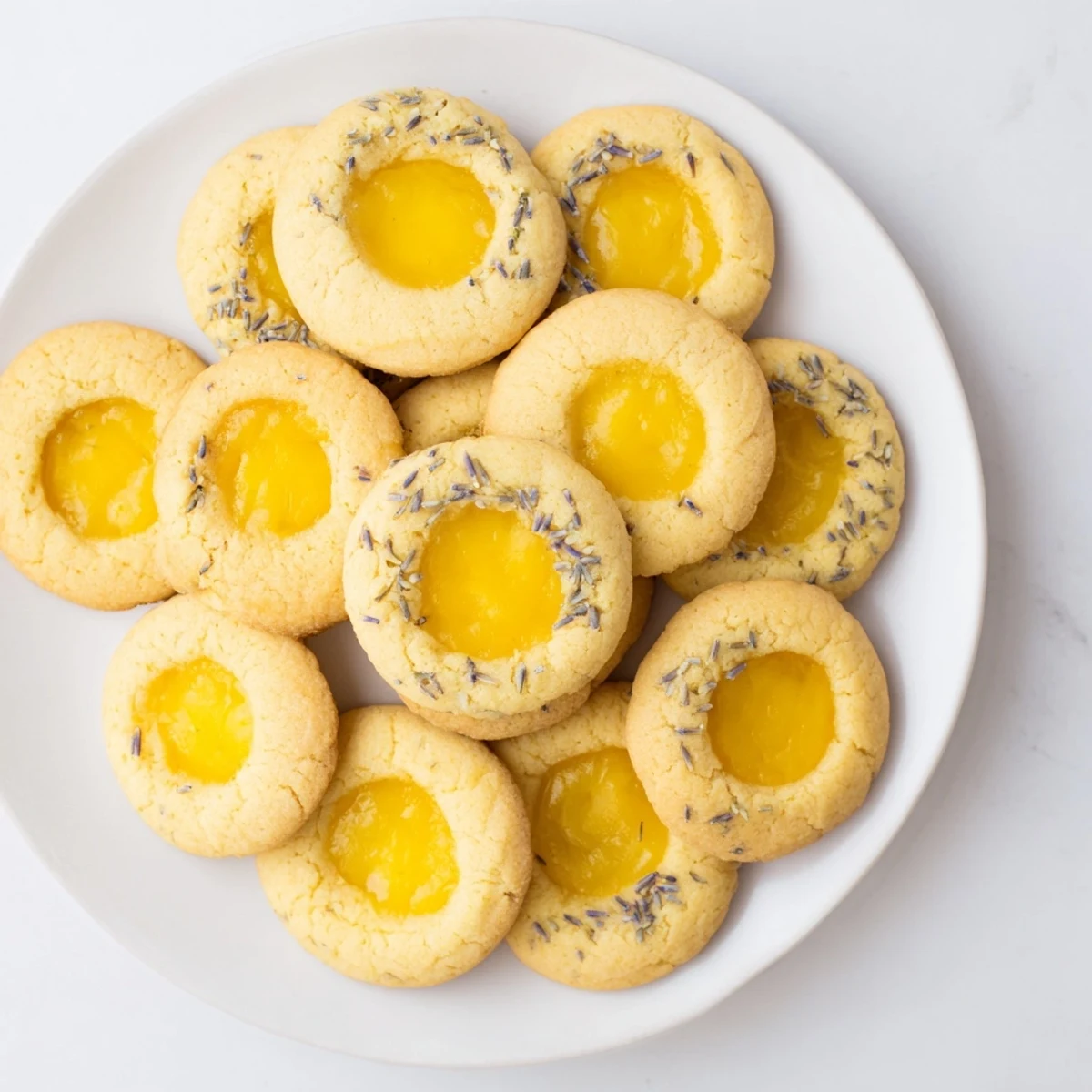
Save These became the cookie I brought to every garden party and bridal shower for three summers running. Something about that floral butter scent makes people lean in closer and ask for the recipe before they have even finished their first bite.
Making Ahead
The dough balls freeze beautifully for up to three months so you can bake fresh cookies on demand. Just roll them into balls press the thumbprints and freeze on a tray before transferring to a bag.
Flavor Variations
Orange zest with marmalade filling creates a marmalade cookie that reminds me of breakfast at my grandmothers house. You can also swap the lavender for finely chopped rosemary and fill with fig preserves for something more sophisticated.
Serving Suggestions
These shine alongside a pot of Earl Grey or an herbal chamomile blend that complements the lavender without overpowering it. I have found they pair unexpectedly well with dry prosecco for brunch.
- Dust with powdered sugar right before serving for a snow kissed look.
- Stack them in clear boxes tied with ribbon for the prettiest hostess gift.
- Pair with vanilla ice cream if you want to turn them into a deconstructed dessert.
 Save
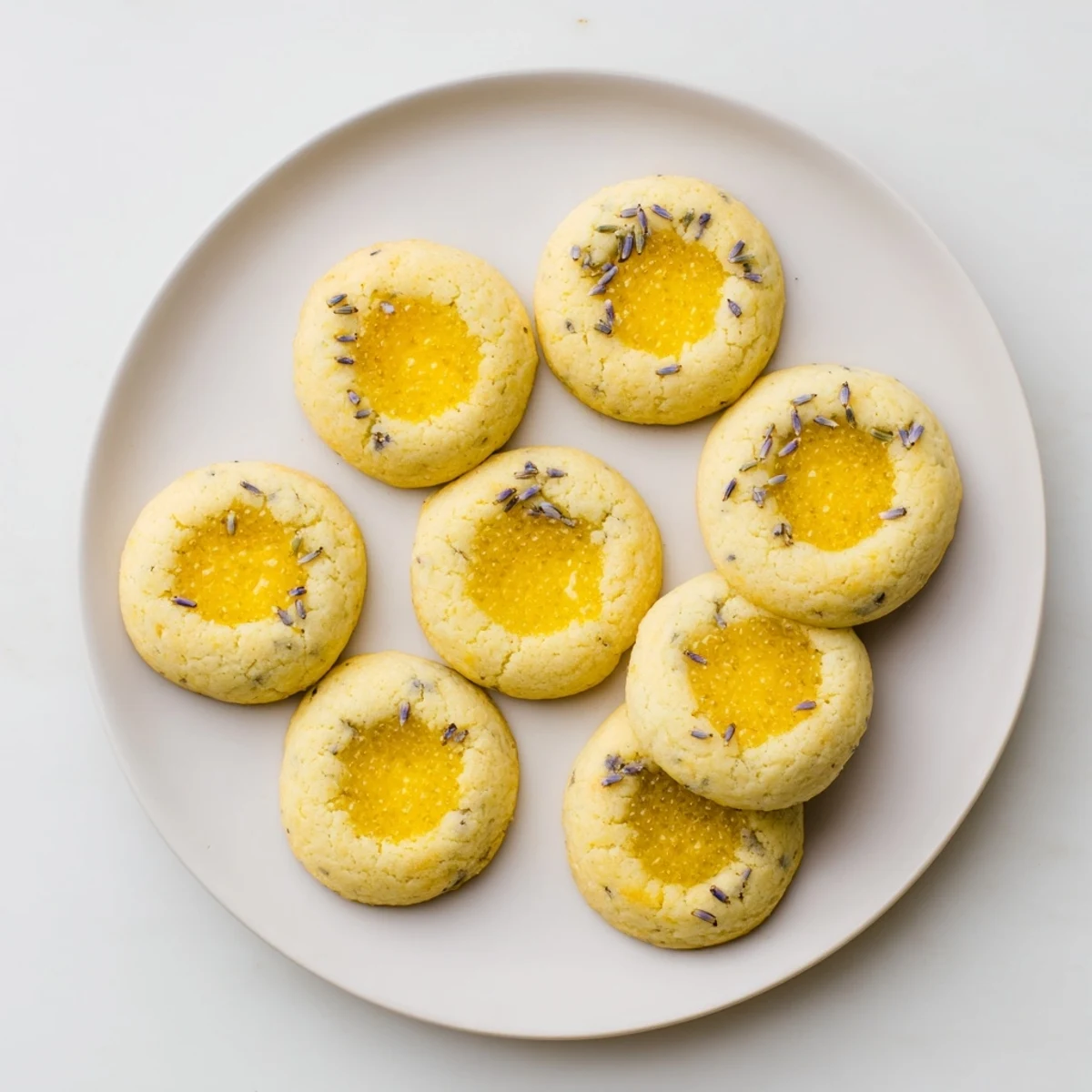
Save There is something profoundly satisfying about a cookie that looks elegant but comes together in under an hour. Hope these bring a little floral magic to your kitchen.
Recipe FAQs
- → Can I use fresh lavender instead of dried?
-
Fresh lavender can be used, but dried culinary lavender is preferred as it provides a more consistent flavor. If using fresh, reduce the amount by half since it contains more moisture and can be more potent.
- → How do I prevent the indentations from closing during baking?
-
Press the centers down again halfway through baking, right after removing the cookies from the oven for the first time. This ensures the wells remain open for the lemon curd filling.
- → Can I make the dough ahead of time?
-
Yes, the dough can be prepared and refrigerated for up to 24 hours before baking. Let it soften slightly at room temperature for easier rolling.
- → What can I use instead of lemon curd?
-
You can substitute with other fruit curds like orange or lime, or use seedless raspberry jam, apricot preserves, or even chocolate ganache for different flavor variations.
- → How should I store these cookies?
-
Store in an airtight container at room temperature for up to 3 days. For longer storage, freeze unfilled cookies and add fresh lemon curd before serving.
- → Why do I reinforce the thumbprints after the first bake?
-
The initial 10 minutes sets the dough structure, and reinforcing the indentations while warm ensures deep wells that will hold the filling without overflowing during the final bake.