
 Save
Save Crafting authentic Greek yogurt at home transforms simple milk into a thick, tangy staple through gentle heating and patient culturing. The process begins by bringing whole milk to 82°C, cooling to a warm 43°C, then introducing live cultures to work their magic over 6–8 hours. What creates that signature velvety texture is the final straining step—allowing the whey to drain away through cheesecloth until the yogurt reaches your desired consistency. The result surpasses anything store-bought, with endless possibilities for customizing with honey, nuts, or seasonal fruit. Plus, the leftover whey becomes a nutritious addition to smoothies or baked goods, ensuring nothing goes to waste.
Standing in my grandmother's kitchen, I watched her transform simple milk into something thick and luxurious. She claimed good yogurt was about patience and temperature, nothing more. Years later, when I finally attempted it myself, I understood what she meant about the magical transformation that happens while you sleep.
My first batch was a happy accident, born from a forgotten carton of milk and curiosity. Now my family requests it weekly, and I've learned to double the recipe because it disappears so fast. There's something deeply satisfying about making something so nourishing from scratch.
Ingredients
- Whole milk: Full fat milk creates the creamiest yogurt, though you can use low fat if preferred
- Plain yogurt with live cultures: This starter is essential, look for brands with active cultures listed on the label
Instructions
- Heat the milk perfectly:
- Warm your milk in a saucepan over medium heat until it reaches 82°C (180°F), stirring occasionally to prevent scorching
- Let it cool:
- Remove from heat and allow the milk to cool to 43°C (110°F), about 30 minutes
- Create your starter:
- In a small bowl, mix 2 tablespoons of cooled milk with the yogurt starter until smooth and combined
- Combine gently:
- Pour the starter mixture back into your cooled milk and stir gently to distribute evenly
- Keep it cozy:
- Pour into a clean container, cover, and wrap in a warm towel or use a yogurt maker to maintain temperature
- Wait for magic:
- Let it culture undisturbed for 6 to 8 hours until set, overnight works perfectly
- Strain for thickness:
- Line a strainer with cheesecloth, pour in your yogurt, and refrigerate for 1 to 2 hours until thick and creamy
- Store and enjoy:
- Transfer to a clean container and refrigerate until ready to serve, keeps for up to two weeks
 Save
Save The morning I discovered how much better homemade Greek yogurt tasted was the same morning my daughter ate it plain, without her usual honey drizzle. That's when I knew this recipe was special enough to stand alone.
Choosing Your Milk
Goat or sheep milk creates wonderfully tangy variations, though whole cow's milk remains the classic choice. Ultra pasteurized milk won't work well for culturing, so check your labels carefully at the store.
Using The Whey
The liquid that strains off during the Greek yogurt process is protein rich whey, perfect for smoothies or baking. I freeze mine in ice cube trays and toss a few into morning protein shakes for an extra nutritional boost.
Serving Ideas
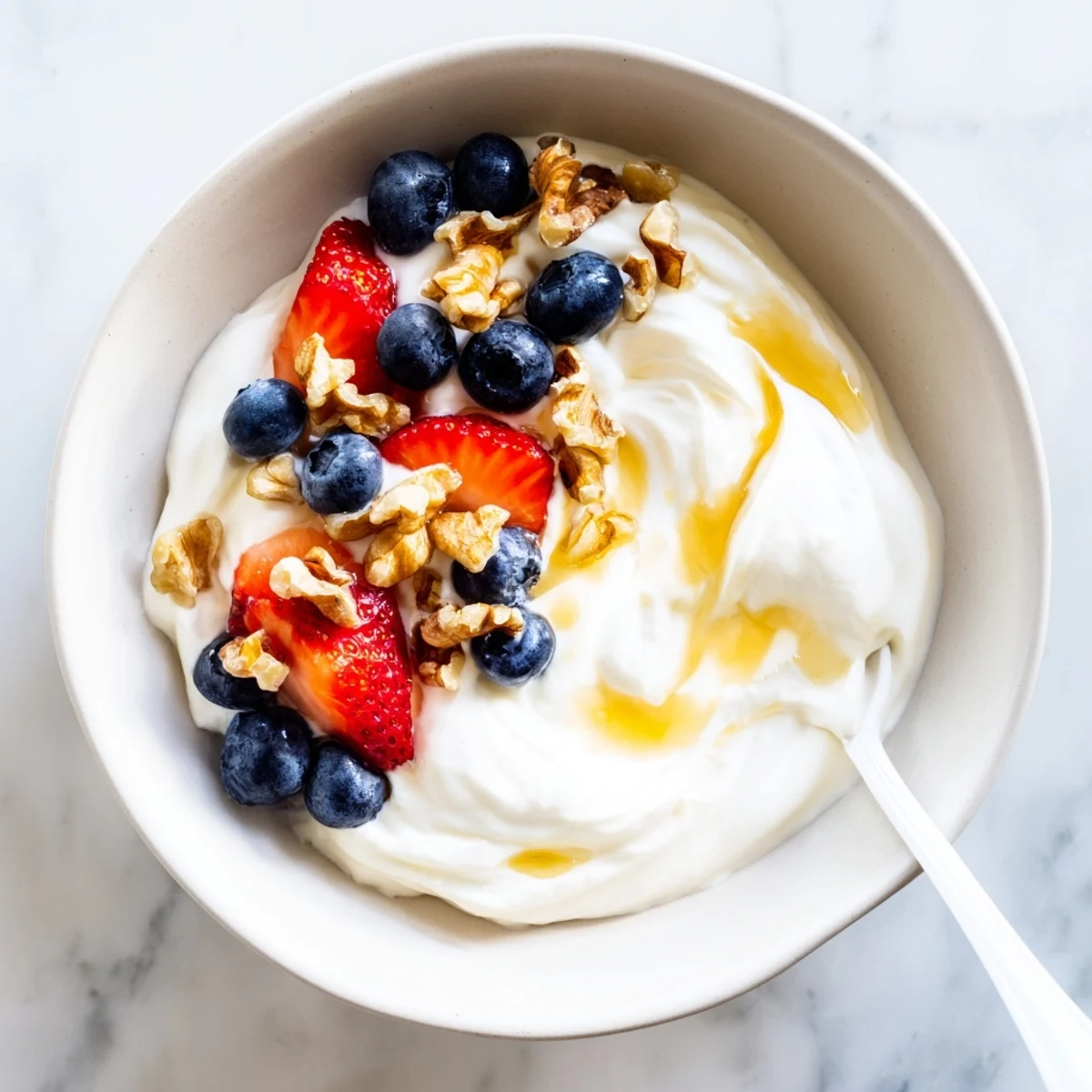
This yogurt becomes a canvas for endless creativity, from breakfast bowls to savory dips. The texture is so luxurious, it needs little more than a drizzle of good honey or fresh fruit.
- Mix with granola and berries for a breakfast that feels like dessert
- Use as a sour cream substitute in tacos or baked potatoes
- Blend with herbs and garlic for an instant vegetable dip
 Save
Save Every batch I make connects me to kitchens across generations, where simple ingredients and patience created something extraordinary. Your first successful batch will feel like a small miracle.
Recipe FAQs
- → What makes Greek yogurt different from regular yogurt?
-
Greek yogurt undergoes straining to remove whey, creating a thicker, creamier texture with higher protein content. The straining process concentrates the yogurt, making it denser and tangier than regular varieties.
- → How long does homemade Greek yogurt last?
-
Properly stored in an airtight container, homemade Greek yogurt keeps fresh in the refrigerator for up to 2 weeks. Always use clean utensils when scooping to prevent contamination.
- → Can I use low-fat milk instead of whole milk?
-
While whole milk produces the creamiest results, you can use low-fat or skim milk. The texture will be less rich, and the yield may be slightly lower due to less fat content during straining.
- → What temperature should the milk be when adding the starter?
-
The milk must cool to exactly 43°C (110°F) before adding the yogurt starter. Temperatures above 50°C can kill the beneficial bacteria, while cooler temperatures slow the culturing process significantly.
- → Why did my yogurt not set properly?
-
Common issues include milk that was too hot when adding starter, insufficient incubation time, or inactive cultures. Ensure your starter contains live active cultures and maintain consistent warmth during the culturing phase.