
 Save
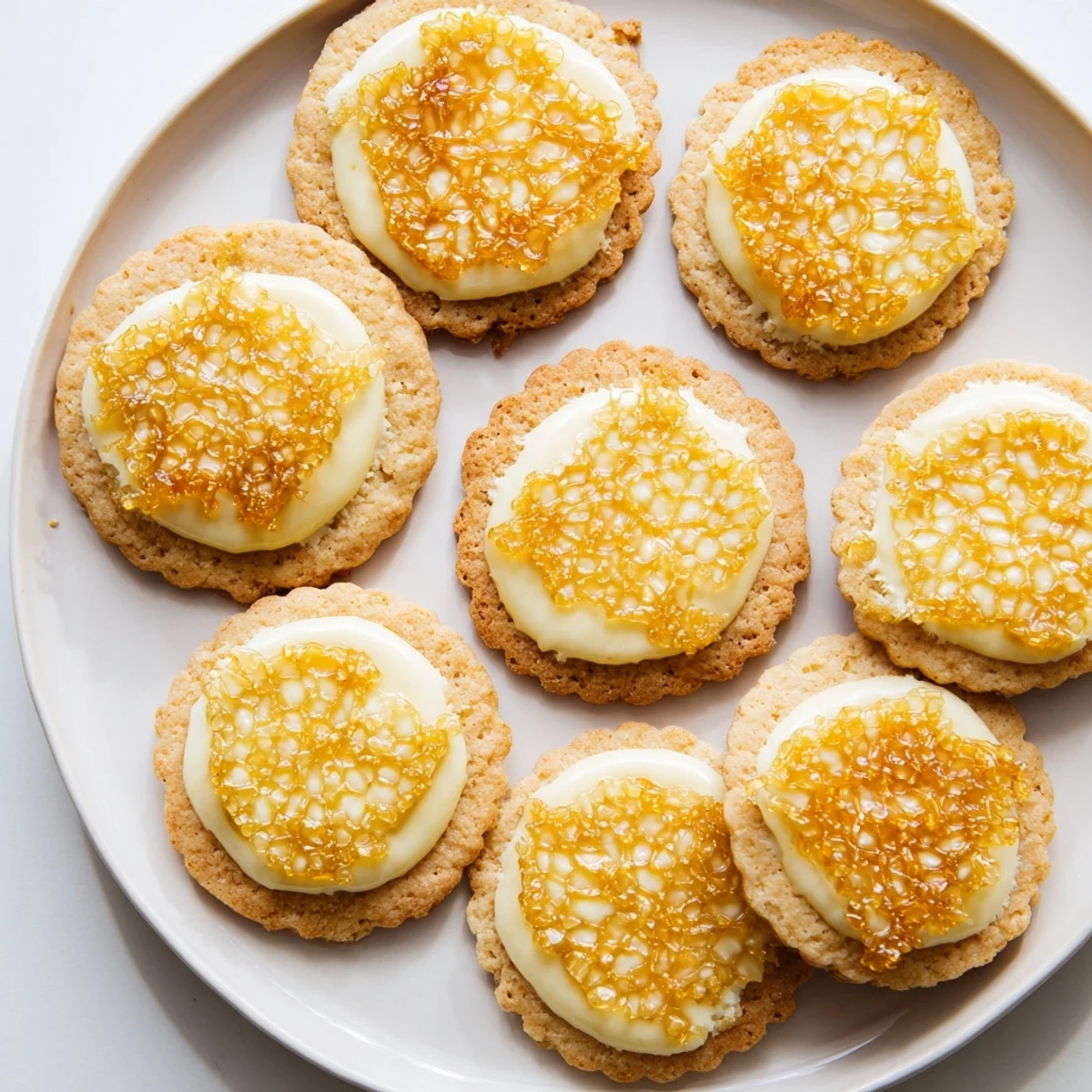
Save These elegant treats combine the tender richness of classic buttery shortbread with the signature elements of crème brûlée. Each cookie features a crisp, golden base topped with smooth vanilla custard and a layer of caramelized sugar that creates that beloved crackling crunch. The process involves chilling the dough, baking until just golden, then adding a quick custard finish before torching the sugar for that signature burnt sugar crust. Serve these impressive cookies for special occasions or elevate your everyday dessert repertoire with this sophisticated fusion of textures and flavors.
Last winter, after watching yet another cooking competition show where contestants panicked over crème brûlée, I wondered what would happen if that shatteringly crisp sugar top met its soulmate in buttery shortbread. The first batch disappeared before they even fully cooled, my kitchen still smelling of vanilla and caramelized sugar. There's something deeply satisfying about that torch moment, even if I did slightly singe my eyebrow the first time.
I made these for my sister's birthday dinner last spring, serving them alongside coffee instead of a full dessert. Everyone kept asking where I'd ordered them from, genuinely shocked when I admitted they came from my own oven. The torch moment became a little after-dinner performance that somehow made the whole evening feel more special.
Ingredients
- Unsalted butter: Room temperature butter is non-negotiable here, it creates that signature tender crumb and incorporates air for the perfect texture
- Powdered sugar: This dissolves beautifully into the butter without adding grittiness, keeping the shortbread meltingly smooth
- Vanilla extract: Don't skip this or substitute, it's the backbone that connects the shortbread to the custard topping
- All-purpose flour: Sifting might feel old-fashioned, but it prevents flour pockets and ensures even distribution for consistent results
- Salt: Just enough to make the butter taste more buttery and balance the sweetness
- Heavy cream: The higher fat content creates a richer custard that won't weep or separate on the cookie
- Egg yolks: These provide the silkiness and structure that transforms simple cream into luxurious custard
- Granulated sugar: Regular white sugar creates the thinnest, most even caramelized layer for that perfect crackle
Instructions
- Cream the butter base:
- Beat the butter and powdered sugar until noticeably lighter and fluffier, scraping the bowl down halfway through. This step creates tiny air pockets that make the shortbread tender rather than dense.
- Bring the dough together:
- Add the vanilla, then gently fold in the sifted flour and salt until just combined. The dough should hold together when pinched but still look slightly crumbly, which is exactly right for shortbread.
- Chill into logs:
- Shape the dough into two uniform cylinders, wrap tightly, and refrigerate until firm. Cold dough slices cleanly into rounds that hold their shape beautifully during baking.
- Bake to golden perfection:
- Slice the chilled dough into rounds and bake until edges are barely golden. They might look underdone in the center but will firm up as they cool, yielding that perfect tender texture.
- Whisk the custard:
- Constant stirring is your best friend here. Cook the mixture just until it coats the back of a spoon, then immediately remove from heat to prevent scrambling the yolks.
- Top with custard:
- Spoon just enough cooled custard onto each cookie to create a thin, even layer. Too much custard will slide off, so restraint pays off with the most elegant results.
- Create the crackle:
- Sprinkle sugar in a thin, even layer and torch until golden amber. The sugar needs about thirty seconds to harden into that signature crisp shell that makes these cookies unforgettable.
 Save
Save My neighbor smelled the caramelizing sugar through our shared wall and knocked on the door with an empty container, hoping for extras. Now she asks about these cookies every time we run into each other in the hallway. Something about that combination of comfort and elegance just makes people feel special.
Getting That Perfect Crackle
The sugar layer needs to be thin enough to caramelize evenly but thick enough to create that satisfying shatter. I've found that holding the torch at a forty-five-degree angle and moving in slow circles produces the most uniform results without scorching spots.
Making These Ahead
The cookie dough logs freeze beautifully for up to three months, just thaw overnight in the refrigerator before slicing. You can also bake and cool the cookies without the topping, storing them in an airtight container and adding the custard and torch just before serving.
Serving Suggestions
These cookies shine brightest when served slightly warm, about fifteen minutes after torching, so the contrast between hot caramel and cool butter is at its peak. They're also stunning alongside a glass of sauternes or a rich espresso.
- Place torch-cooked cookies on a wire rack for five minutes to let the sugar fully set
- If you don't have a torch, your oven broiler works in about sixty seconds
- Extra custard keeps in the refrigerator for up to two days
 Save
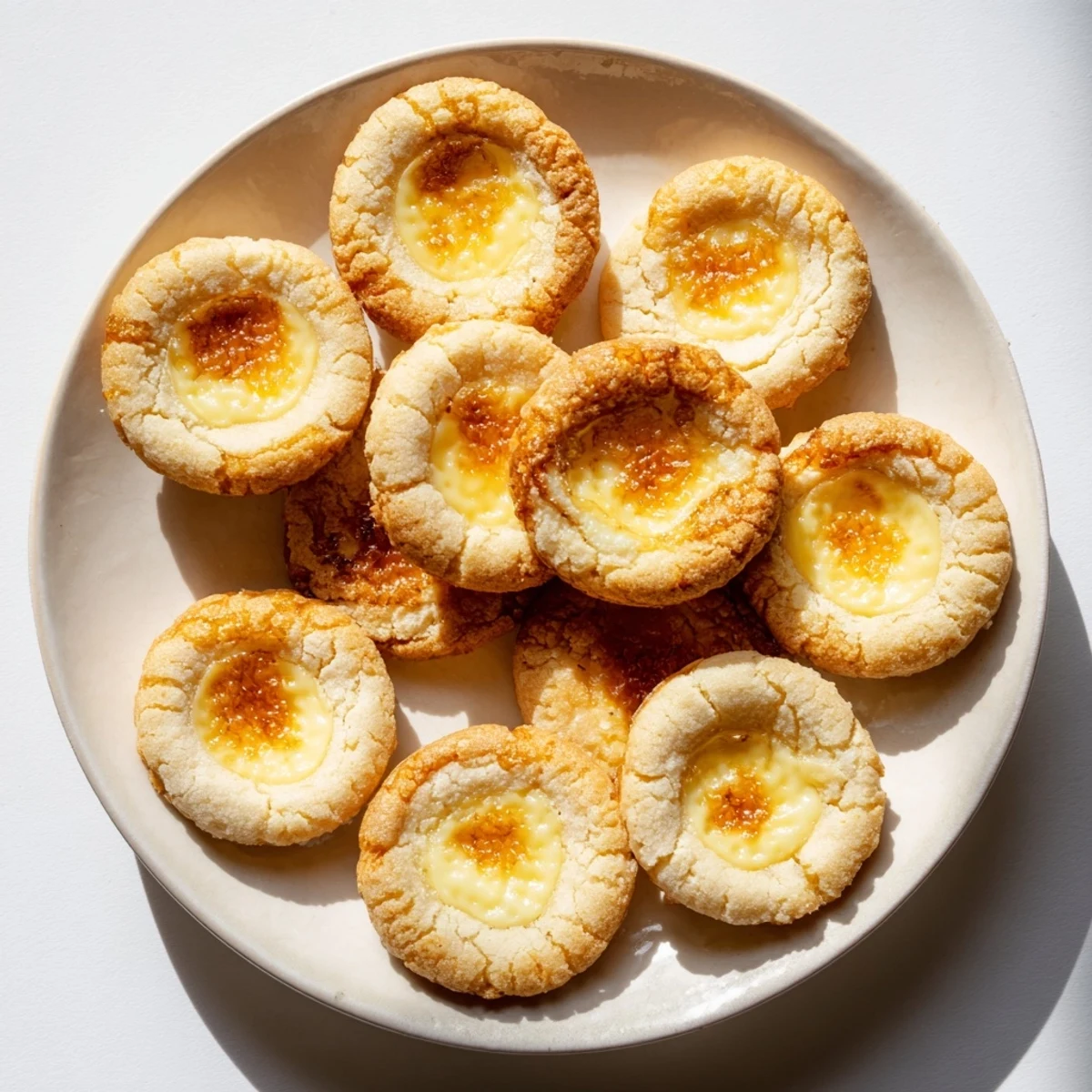
Save There's something magical about hearing that first crackle through the sugar shell, like opening a tiny present in every bite.
Recipe FAQs
- → Can I make these without a kitchen torch?
-
Yes, you can caramelize the sugar under your oven's broiler for 1-2 minutes, watching closely to prevent burning. The torch method provides more control and even browning.
- → How long will these cookies stay fresh?
-
Store in the refrigerator for up to 5 days. The caramelized sugar layer will soften slightly over time, but you can re-torch the tops before serving to restore the crisp texture.
- → Can I freeze the dough?
-
Wrap the dough logs tightly in plastic and freeze for up to 3 months. Thaw in the refrigerator before slicing and baking. You can also freeze baked, unfilled cookies for up to 2 months.
- → What sugar works best for the caramelized topping?
-
Granulated sugar creates the smoothest caramelized layer. Turbinado or raw sugar adds extra crunch and depth of flavor. Avoid powdered sugar as it contains cornstarch and won't caramelize properly.
- → Why did my custard turn into scrambled eggs?
-
The custard needs gentle heat and constant stirring. Use medium-low heat and remove from the stove as soon as it thickens slightly. If you see any curdling, immediately strain through a fine-mesh sieve.
- → Can I make these smaller or larger?
-
Absolutely! Adjust the baking time accordingly—about 8-10 minutes for smaller 1-inch rounds, or 14-16 minutes for larger 3-inch cookies. Watch for golden edges as your doneness indicator.